
Sullivan Parole and Probation Compared
Parole and probation both place a person in the community under rules, but they begin in different ways. Parole is a conditional release from prison. The Tennessee Board of Parole decides whether to grant it, and the Tennessee Department of Correction, or TDOC, provides community supervision. Probation is generally a community sentence ordered by a court. A person may start probation without serving a prison term, or may serve it after time in custody when the judgment directs that result.
The distinction matters when reading a Sullivan County release record. A FOIL status of Parole supports that the matched person has left prison but remains under a sentence. A Probation status supports community supervision, yet it does not prove a prison release occurred on the status date. Inactive is a former TDOC record category. It should not be translated into “sentence completed” without sentence, release, and court records.
| Question | Parole | Probation |
|---|---|---|
| Who authorizes it? | Tennessee Board of Parole | The sentencing court |
| What does it mean? | Conditional release from incarceration | Community sentence under stated terms |
| Best public check | FOIL status, Board record, and TDOC location | FOIL when covered, plus the Sullivan court judgment |
| Is the sentence discharged? | No, not merely because parole began | No, not until the ordered term ends |
- Discharge
- The formal end of a sentence or supervision term.
- Absconder
- A supervision classification that must come from the responsible agency, not a guess based on a missed listing.
- Detainer
- A request or authority that can hold a person for another agency.
Verify Sullivan Post-Release Supervision
Use the narrowest reliable identifier. TDOC's Felony Offender Information Lookup, known as FOIL, offers searches by name, TDOC ID, or State ID. A name search also allows race and matching aliases, and the system requires a CAPTCHA. FOIL covers felony offenders who are currently or formerly in TDOC custody or supervision. It is not a full Sullivan County jail history, and it may not contain a local case that never entered TDOC jurisdiction.
- Search by TDOC ID or State ID when either number is known. Use full name and identity details only when an agency number is unavailable.
- Compare the result's name, identifying data, offense, and sentence context. Do not accept a same-name result without a sound match.
- Copy the status exactly, including its as-of date and displayed location. Keep “parole,” “probation,” “incarcerated,” and “inactive” distinct.
- For probation imposed in Sullivan County, inspect the court judgment and later orders through the applicable clerk division.
- Use the official TDOC field directory to identify the local supervision office. Ask about process, not facts the office cannot lawfully disclose.
The official FOIL scope page says records may include a photo, status, location, offenses, sentence information, parole-hearing status, and release information. Save the retrieval date because a supervision record can change after an arrest, revocation, transfer, discharge, or data correction. The broader Sullivan County released-inmate search path helps reconcile county custody, court authority, and state supervision when those events do not line up.
The FOIL search screen shows its three official search routes.
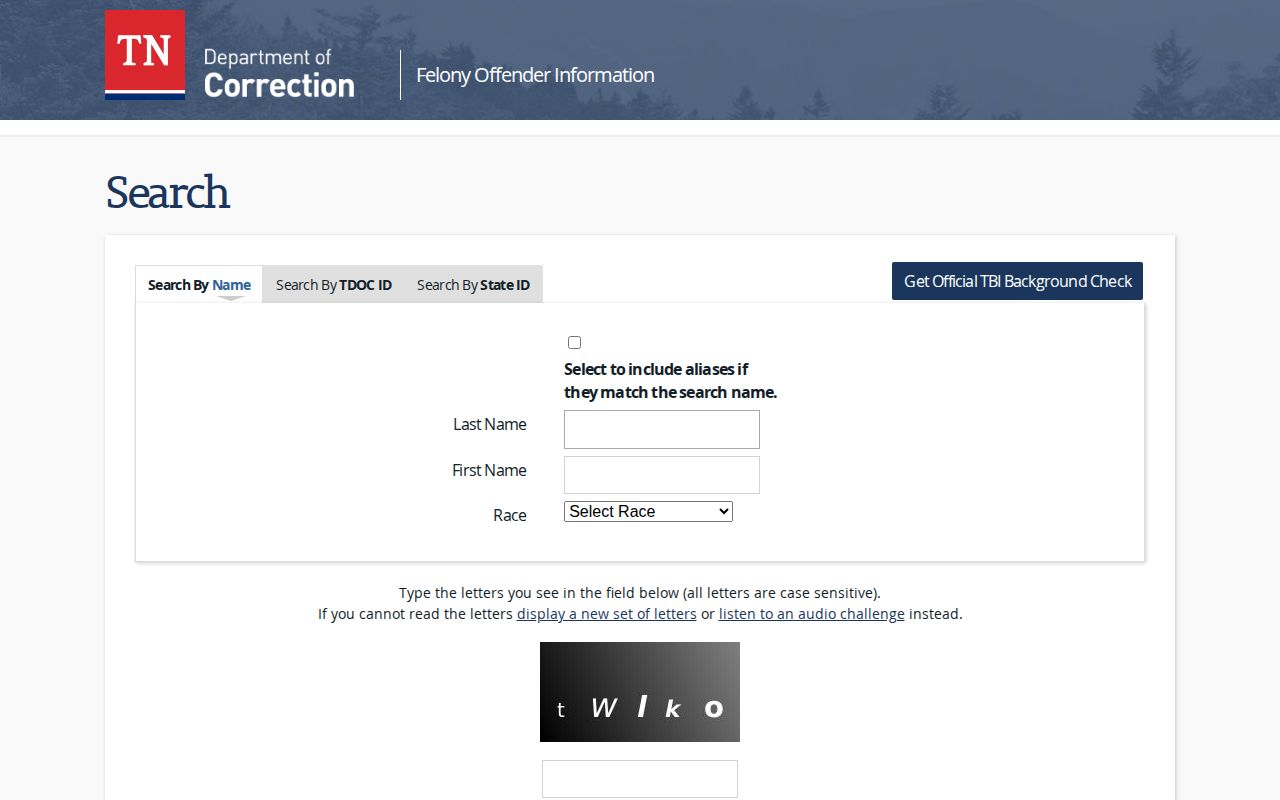
The tabs make an agency number the clearest route when one is available, while the name route requires closer identity checks.
Important: A parole hearing date, recommendation, or grant is not proof of physical release. Confirm the completed event through FOIL, VINE, and TDOC records.
Sullivan Supervision Office Details
Sullivan County has a dedicated TDOC District 10 office in Blountville. That local listing is more precise than routing every question to the broader Johnson City office for Washington and Unicoi counties. First copy the exact FOIL status and location. Then use the Sullivan office for procedural questions about the correct unit, reporting route, or public-record custodian. Staff may limit personal disclosures, and the office is not a substitute for the written supervision or court record.
TDOC District 10, Sullivan County
143 Blountville By-Pass
Blountville, TN 37617
Phone: 423-279-3200
Fax: 423-279-3222
The TDOC field-office directory lists the Sullivan location.
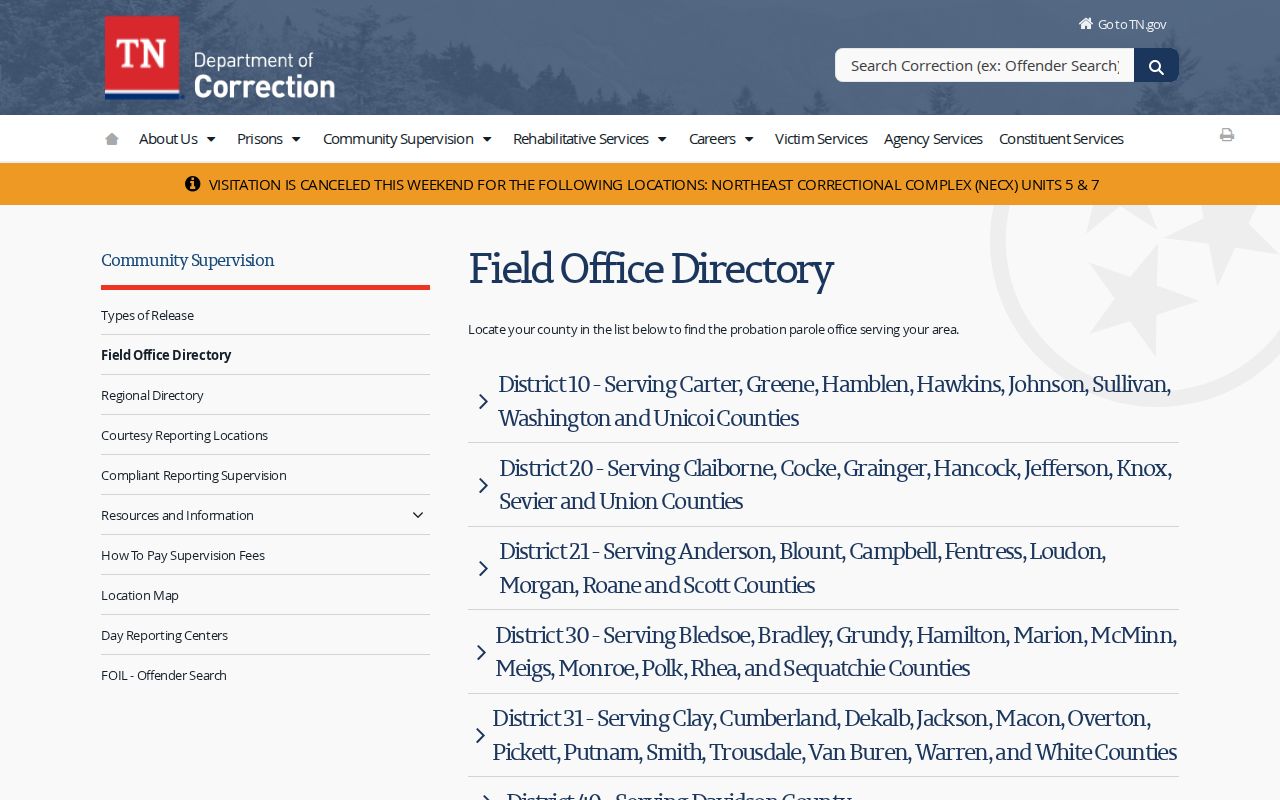
The directory supports local routing after FOIL identifies a Sullivan supervision location; it does not serve as a public person-results database.
TDOC also lists Compliant Reporting Supervision at 866-506-7225. That line is not a general person-verification number. For a court-imposed probation order, use the Sullivan County Circuit Court Clerk or the correct General Sessions, Law, or Juvenile division because the judgment defines the term and conditions.
Note: General weekday office hours published for county offices are not jail release hours and do not establish when a supervised person left custody.
Sullivan Parole Decision Milestones
The Tennessee Board of Parole publishes weekly hearing schedules for state prisons and county jails. Schedules are normally updated Monday, or Tuesday after a Monday holiday, and late changes can occur. A calendar entry only means a hearing is planned. Hearing officers make nonbinding recommendations. Board members may adopt, change, or reject them, and a grant may still be rescinded or blocked before a person leaves custody.
The Board's weekly parole calendar is useful for timing and participation.
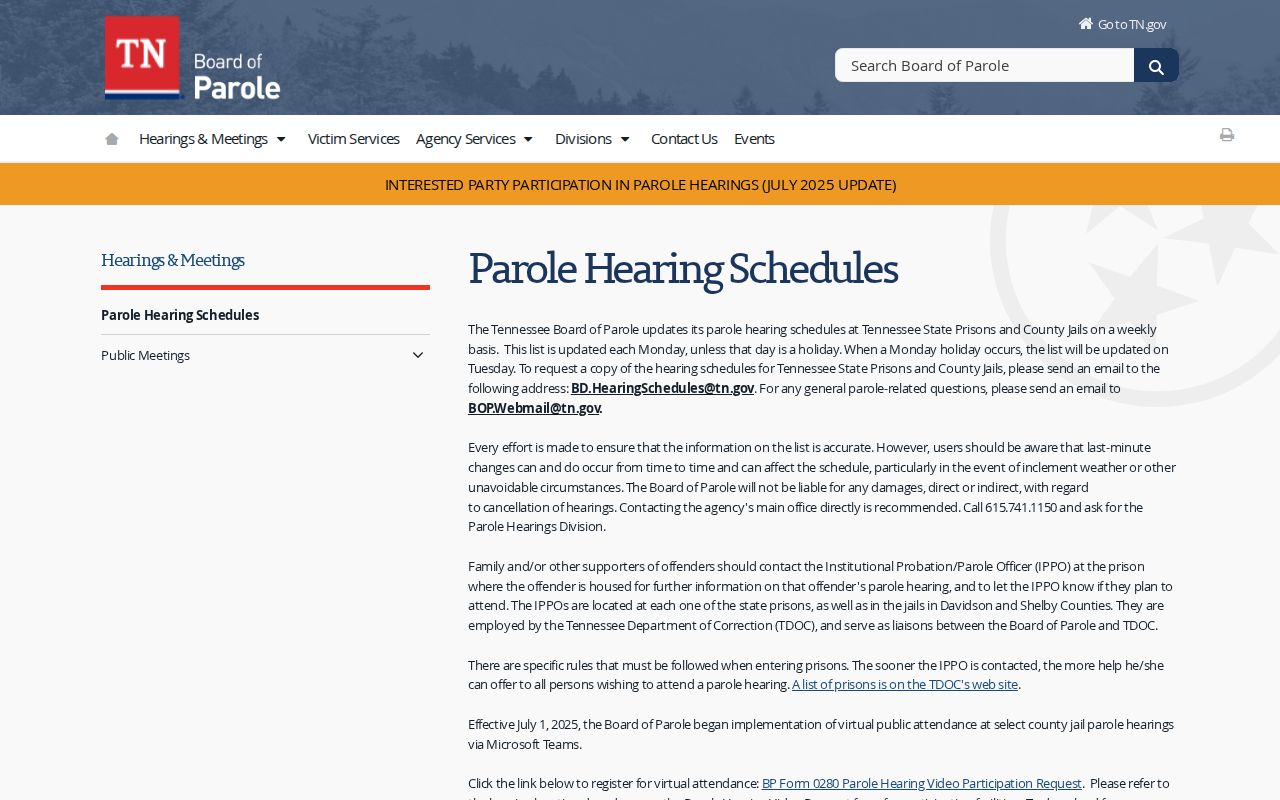
The schedule should be paired with a final decision record and a later TDOC or VINE status event, never treated as a released-inmate list.
No separate public statewide Board decisions database was found. FOIL may display person-level parole-hearing information, while the Board's Hearings Division explains the decision process. A requester can seek the actual decision through Board channels. Eligibility under Tennessee law allows consideration; it does not order release.
Board materials identify several hearing types that should not be merged. A grant hearing considers possible parole. Pre-parole and post-parole rescission hearings address whether a prior action should be withdrawn, while an appeal hearing reviews a qualifying challenge. The Board explains that concurrence requirements vary with the decision and offense, so one hearing officer's view is not the final result. Its appeal procedure also uses a deadline measured from the offender's receipt of the final decision and limits the grounds to matters such as significant new information, supported misconduct, or a major procedural error. These records describe decision steps. They still do not replace a later release event.
Sullivan Warrants and Absconder Claims
SCSO publishes a warrants page and tip route, but the linked list was empty when researched. That absence proves nothing about a specific person. Sullivan's release procedure separately requires staff to check NCIC, local warrants, other charges, sentences, holds, and wants before release. A public list can be incomplete, delayed, or limited in scope.
A county warrant is also not automatically a parole-absconder finding. Verify the warrant with the court or warrants unit, and verify supervision classification through FOIL and TDOC. Do not infer a violation from a missed appointment, a roster disappearance, or an inactive public record. The SCSO warrant channel is one lead, not the final supervision record.
An alleged violation may lead to a warrant, arrest, revocation hearing, continued supervision, or another outcome. “Revocation” means supervision is canceled by lawful authority, often followed by return to custody. Until the responsible court, Board, or TDOC record states an outcome, describe only the verified status and date.
Sullivan Release Property Disputes
Sullivan's local release procedure connects physical release to a signed property transaction. The booking officer must return inventoried property and money and obtain a signed, dated receipt. If property is missing or disputed, the matter goes to the shift supervisor. Missing items are listed and signed, and a complaint proceeds to the Administration Lieutenant.
This record is separate from parole or probation status, yet it can help document the jail release transaction that came before supervision. A person disputing the handoff should identify the booking and ask SCSO for the existing property receipt and complaint process. The SCSO release policy supplies the local steps. A receipt may corroborate release, but FOIL and the court record remain the sources for post-release status.
Sullivan Support After Release
SCSO directly links Tennessee REDLINE and the Sullivan County Anti-Drug Coalition as support resources. REDLINE is a confidential call or text referral service at 800-889-9789, available around the clock. The SCSO substance-abuse resource page provides the official local route.
Use the service as a treatment and referral contact after release. It does not verify parole, probation, a court condition, or discharge. Dated county discussions of proposed programming should not be presented as current programs without proof that they were adopted and remain active. For supervision duties, rely on the written terms and the assigned TDOC or court contact.
Sullivan Supervision and Discharge
Community supervision ends through the controlling legal process, not merely through the passage of an expected date. The court record governs a locally imposed probation term. TDOC and Board records govern parole and state supervision. A later FOIL status can help, but an inactive category alone does not state why or when a sentence ended.
Preserve the last active status, its retrieval date, the judgment or parole decision, and the formal discharge record when available. A new arrest or hold can affect custody without proving the old supervision term ended. For a clear conclusion, match the person, read each agency's label, and request the record from the office that created it.